Why Performance Reviews Fail (And How Managers Actually Fix Them)
Performance reviews are broken. Not because the form is bad or the timing is wrong, but because managers stop doing the real work months before the review ever happens.
The moment a manager avoids giving feedback in a one-on-one because it's uncomfortable, because they haven't practiced it, or because they're not sure how the employee will react, the review cycle is already lost. Everything that comes after is just theater.
Here's what actually happens. An employee walks into their review expecting to hear "you're doing well" or at worst "a few areas to work on." Instead, they get hit with a rating or ranking that contradicts everything they thought they knew about their own performance. The manager didn't blindside them on purpose. The manager just never said it out loud before.
I've seen this play out in banking ops more times than I can count. An associate gets reorganized under a new manager right before mid-year reviews. The previous manager left a rating: this person ranked lower than their peers. Clinical. Documented. Never actually communicated to the associate in any meaningful way. So the new manager sits down to deliver the review, and within minutes the associate is in shock. Emotional. Defensive. They took personal leave to process it. If they're resilient, they come back angry and focused and improve significantly. If they're not, they leave the company or check out entirely and eventually get managed out.
The review didn't fail because the rating was unfair. It failed because the feedback never traveled the distance from the manager's head to the associate's ears.
Why Managers Skip the Feedback
There are three reasons managers avoid giving ongoing feedback, and none of them are about laziness or apathy.
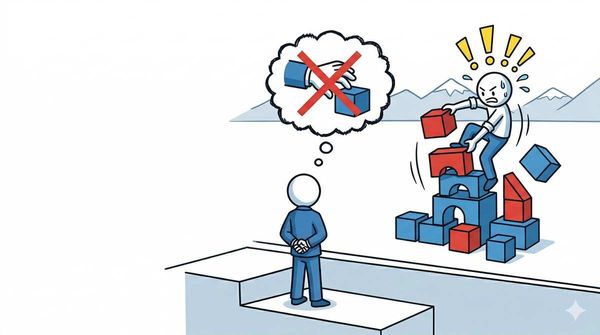
The first is that it's hard. Telling someone something they don't want to hear, or something they don't already know to be true, is genuinely uncomfortable. If you haven't practiced doing it, if you haven't developed any skill around delivery, avoidance feels safer than the alternative. You don't know how they'll react. You don't want to damage the relationship. So you wait. You tell yourself you'll bring it up next time.
Next time becomes the review.
The second reason is that most employees haven't been trained to receive feedback either. Especially more junior folks. When someone who's never had a direct, honest manager hears developmental feedback for the first time, it lands as criticism. The message gets lost in the emotional reaction to being told they're not doing something well. This makes giving feedback feel even harder because managers have seen it go badly before. They've watched someone shut down or get defensive, and they've decided it's not worth it.
But here's what's actually true. The associates who receive feedback well, who lean into it with curiosity instead of defensiveness, tend to be your higher performers. They hear feedback as someone paying attention to their work, seeing what they're doing, investing in their trajectory. When you start to notice which associates respond that way, those are the people worth betting on.
The third reason is that managers don't always understand what feedback is actually for. It's not a report card. It's not a warning. It's information. Specific, timely information that gives someone the clarity they need to make good decisions about their own career. When managers treat feedback that way, as useful data instead of uncomfortable judgment, it changes how they deliver it and how employees receive it.
The Real Cost of Skipping It
When managers avoid ongoing feedback, the cost doesn't show up until review time. And by then it's expensive.
The most obvious cost is the associate impact. Someone walks into a room expecting one thing and gets another. Their ability to process the feedback in that moment is essentially zero because they're too busy processing the shock. The conversation that was supposed to be about growth and trajectory becomes crisis management. You're not developing anyone in that room. You're doing damage control.
But the cost scales from there.
If the associate is resilient, they absorb the hit, take time to process it, come back with a plan, and improve. That's the best case. You lost months of development time you could have had if you'd been having honest conversations all along, but at least the story has a good ending.
If they're not resilient, or if they're simply not willing to accept feedback they've never heard before, they disengage. They start looking for other jobs. They put in minimum effort while they figure out their next move. Or they just quietly stop caring, and eventually you're managing them out of a role they could have left on their own terms if they'd had better information sooner.
The cost of a surprised associate isn't just one bad review meeting. It's months of disengagement, potential turnover, and the organizational weight of managing someone out versus supporting someone in making a smart decision for themselves.
What Specific Feedback Actually Looks Like
The other failure mode isn't skipping feedback entirely. It's giving feedback so cushioned and vague that the message never actually lands.
This is more common than managers realize. You say something. The associate hears something different. You walk away thinking you addressed it. They walk away thinking they're fine. Six months later you're sitting across from each other in a review and you're both confused about why you're having the conversation you're having.
The fix is specificity. Not general observations. Not vague directional comments. Feedback anchored to a specific moment, tied to a specific competency, with a clear explanation of why it matters.
Here's an example of what that looks like in practice.
One of the competencies I care most about is influence. The ability to take a position that's not yet shared by others and over time, through the right communications, the right understanding of needs and desired outcomes, align people to a common vision. It's hard to do well and it matters enormously in ops work.
So when I'm in a meeting and I watch an associate spend most of the time telling a customer what we did without spending any time on why they should care, I don't wait until the review to address it. I give that feedback close to the moment, while the associate can still connect my observation to the specific thing that happened.
It sounds like this: "In that meeting, we spent most of the time on what we delivered and not enough time on what value that created for them. Walking out of that room, that customer knows we did a lot of work. But they may not fully understand what they got from it. That makes it hard for them to give us credit, to advocate for us internally, or to trust us with the next thing. Here's what I'd try differently next time."
That's it. Specific moment. Clear competency. Business impact explained. Alternative approach offered.
No corporate jargon. No vague encouragement. No sandwiching criticism between compliments until the message gets lost. Just direct, useful information delivered close enough to the moment that the associate can actually use it.
How the One-on-One Changes Everything
The performance review is not the performance management tool. The one-on-one is.
Most managers treat one-on-ones as status updates. What's on your plate, what's blocking you, what do you need from me. That's useful but it's not enough. The one-on-one is where you build the habit of honest, ongoing conversation. It's where feedback gets delivered close to the moment instead of six months after the fact. It's where you actually understand what an associate is working toward, what they're struggling with, and whether the role they're in is actually the right role for them.
When managers invest in one-on-ones as development conversations instead of status updates, a few things happen.
First, the review becomes a formality. You're not delivering news in that room because there is no news. Everything you say has been said before. The rating reflects conversations that have been happening all year. The associate isn't surprised because they've been part of the conversation from the beginning.
Second, you start to see clarity replace volatility. Associates who have been getting honest, ongoing feedback understand what's actually required of them. They know what good looks like in this role. And that clarity lets them make informed decisions about their own careers. Some of them will lean in and do the work to get there. Others will realize this isn't the role for them and start looking for something that fits better. Both of those are good outcomes. Neither of them requires a crisis.
Third, your higher performers get better faster. When talented people get specific, timely feedback from a manager who's paying attention, they use it. They adjust. They ask better questions. They show up differently in the next meeting because they know what you're looking for and why it matters.
What Clarity Actually Does
Here's the thing about ongoing feedback that most people miss. It's not just about catching problems early. It's about giving people the information they need to make real choices.
Not everyone on your team is trying to get to the same place you're trying to take them. Not everyone wants to develop the influence skills or the communication skills or the systems thinking that you might need from them in their next level role. And that's not wrong. It might even mean you're the wrong manager for them or they're in the wrong team for where they want to go.
When you're having honest ongoing conversations, those things surface naturally. You find out what someone actually cares about. You find out where they want to go. And sometimes that's aligned with what you need and sometimes it's not.
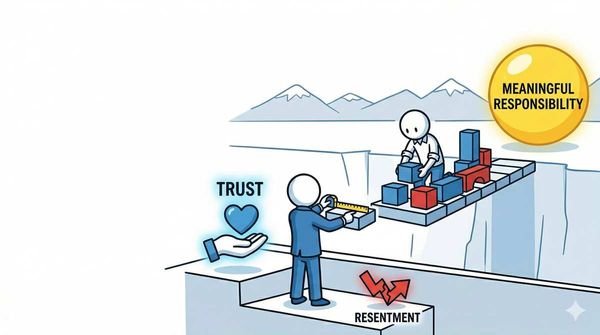
When it's not aligned, the right move is to help them find something that fits better. Inside the company or outside of it. Not because they're a bad employee but because they have clarity now about what they want and you have clarity about what you need. That's a better outcome than keeping someone in a role that's wrong for them until resentment builds on both sides and the exit is messy.
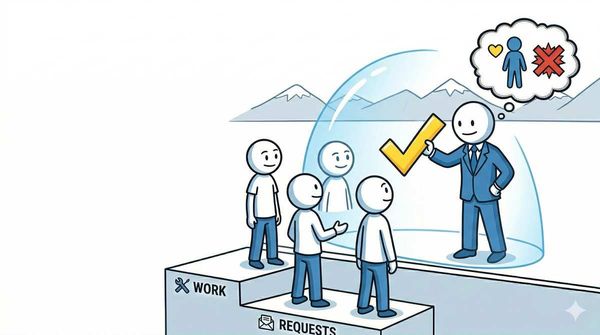
Clarity is the gift that ongoing feedback gives people. Not just direction. Not just improvement. The ability to make real, informed decisions about their own careers.
How to Actually Fix This
This isn't a complicated system. It doesn't require a new tool or a better template. It requires three habits.
One: Give feedback close to the moment. When you observe something worth addressing, address it within 24 to 48 hours while the associate can still connect your feedback to the specific thing that happened. Don't hold it for the review. Don't wait for a pattern to emerge. Say it now.
Two: Anchor feedback to competencies. Don't give vague directional feedback. Tie your observation to a specific skill or competency that matters in this role. Explain why it matters. Show what better looks like. Give the associate something concrete to work with.
Three: Use your one-on-ones. Stop running them as status updates. Use them as development conversations. Ask what the associate is working on, where they're getting stuck, and what kind of feedback would actually be useful to them. Make it a two-way conversation instead of a check-in.
Do those three things consistently and the review takes care of itself. You're not delivering news. You're having a conversation you've been having all year.
A Note on the Review Itself
If you've been giving specific, ongoing feedback all year, writing the actual review should take about 30 minutes. You're not trying to remember what someone did. You're not scrambling to justify a rating. You're documenting conversations that already happened.
If writing the review feels hard, that's information. It usually means the ongoing feedback wasn't happening the way it should have been. Use that friction as a signal to do things differently in the next cycle.
The review isn't the product. The ongoing conversation is the product. The review is just the receipt.
Performance reviews fail because managers treat them as the main event instead of the summary. The real work happens in one-on-ones, in hallway conversations, in feedback delivered 24 hours after a meeting instead of six months later in a formal review cycle.
Start there. Everything else follows.