When to Step Back In (And When to Let Them Fail)
The hardest part of delegation isn’t letting go — it’s knowing when to step back in.

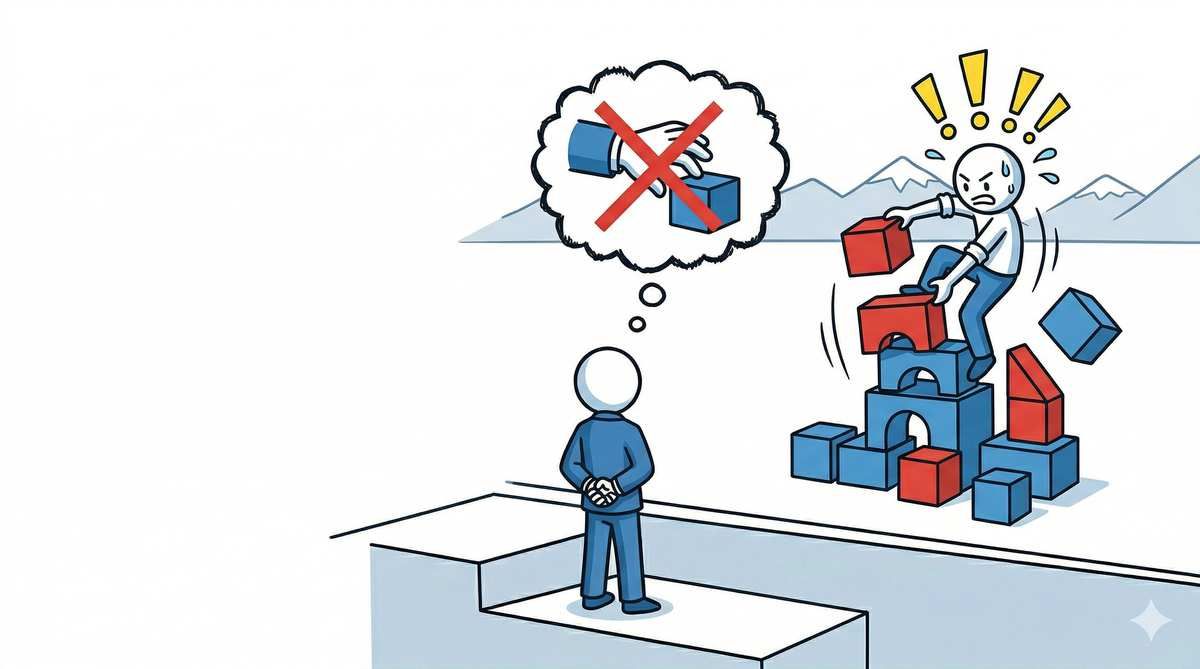
Failure isn’t a bad thing. It’s how you figure stuff out. If you address problems as they arise and treat them as learning, failure is actually a powerful tool for building capability.
The Difference Between Recoverable and Not
The question I ask is: if this goes wrong, can we recover from it? If the answer is yes — we can course-correct, no one gets fired, no customer gets burned in a way that can’t be fixed — then I let it play out. If the answer is no, I intervene earlier.
That’s the line. Not “will this be perfect?” but “will this be survivable?”
Signals That Mean Step In Now
I’m watching for a few things: They’ve stopped communicating. They’re making decisions that affect others without looping those people in. They’re solving the wrong problem. Or they’ve hit a blocker they don’t have the authority or relationships to clear.
Any of those, I step in. Not to take over — to unblock. There’s a difference.
Stepping In Without Taking Over
When I step back in, I try to do it as a partner, not a critic. “Here’s what I’m seeing — what’s your read?” That conversation usually surfaces what’s actually stuck. From there I can add what they need: a decision, a connection, a reframe — without yanking the work away from them.
This is part of the Delegation Isn’t About Assigning Tasks series. Also read: Delegation and Trust and Why Delegation Fails.