How to Set Boundaries Without Being Cold
You can be warm and still have limits. Most new managers don’t know how.

One of the stranger challenges of becoming a manager is figuring out how to be a different kind of person at work — without actually becoming a different person.
You were peers with some of these people. You had lunch together, vented together, maybe covered for each other. Now you’re their manager. The dynamic has to change. And that’s uncomfortable for everyone.
Why New Managers Overcorrect
Most new managers handle this discomfort in one of two ways. They either try to pretend nothing changed — still being “one of the team” in a way that erodes their authority — or they swing hard in the other direction and become stiff, formal, and distant.
The second version is what most people mean when they say a manager “went cold.” It’s usually not cruelty. It’s self-protection. You don’t know how to hold the boundary, so you build a wall instead.
What Boundaries Actually Are
A boundary isn’t a wall. It’s a clear line about what you can and can’t do in a given role, explained with enough context that the other person understands why.
For example: “I’m not going to be able to tell you what’s happening in the performance conversation I had with someone else on the team. That’s confidential. But if you have concerns about your own standing, I want to hear them directly.” That’s a boundary. It’s clear, it explains the why, and it keeps the door open.
Warmth and Authority Aren’t Opposites
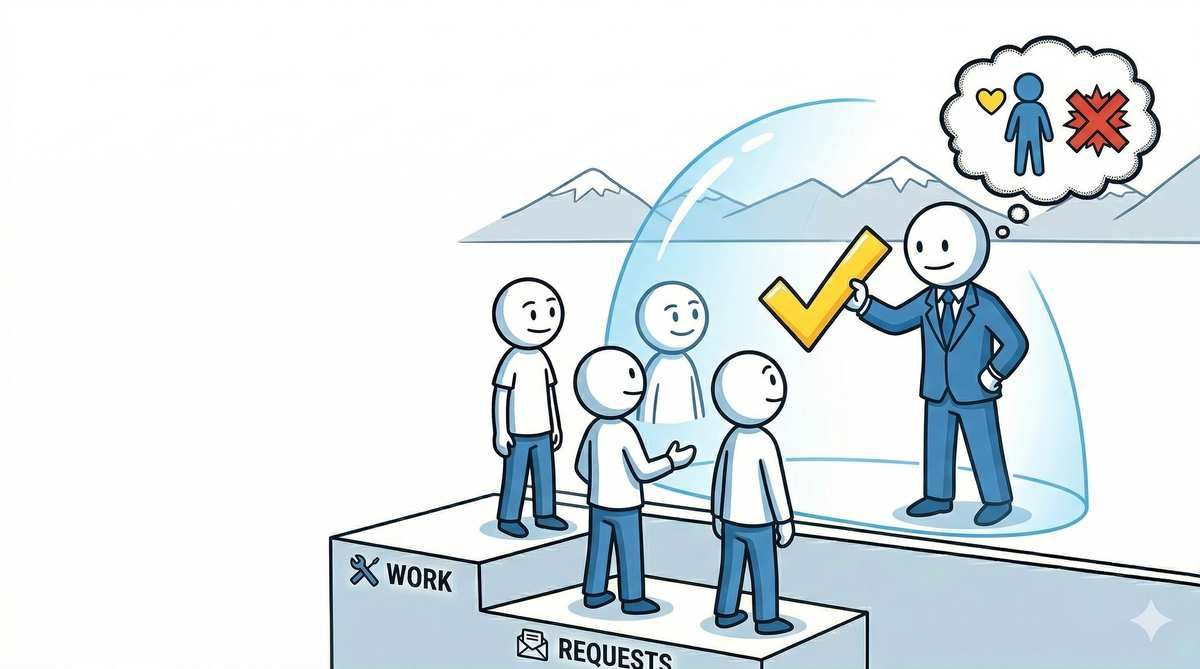
The managers I’ve seen navigate this best are genuinely warm — curious about their people, present in conversations, willing to be human — and also very clear about what their role requires. The warmth isn’t a performance. It’s real. The clarity isn’t coldness. It’s respect.
If you’re caring about your team and being clear about what your role requires, you’re not being cold. You’re being a professional.
This is part of the First-Time Manager’s Real Problems series. Also read: Building Credibility When Your Team Doesn’t Know You Yet.