Delegation and Trust: How to Know When Someone Is Ready
Delegation isn’t a reward. It’s a tool — and timing matters.

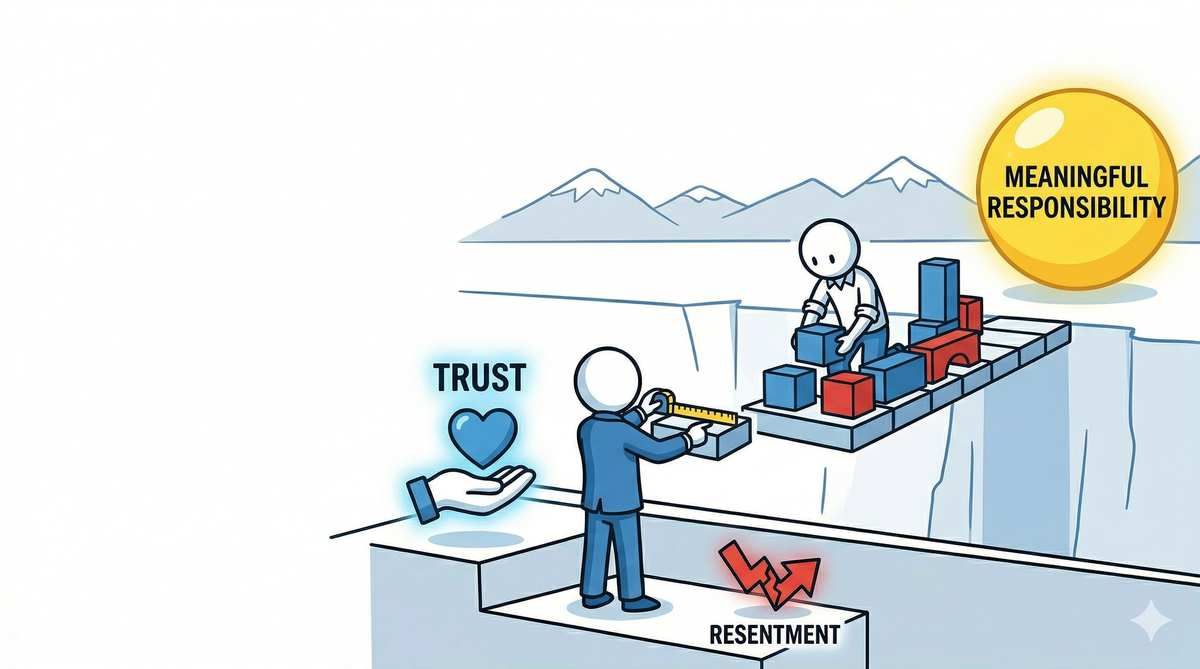
I don’t sit around assessing whether someone’s ready to be delegated to. I look at the work that needs to happen and think about who’s best positioned to own it. Then I set them up correctly and let them run.
The Two Questions That Actually Matter
Before I delegate something meaningful, I’m asking two things: Does this person understand what good looks like in this domain? And have I seen them exercise judgment before — not just execute tasks?
Judgment is the key word. I can teach almost anyone a process. I can’t quickly teach someone to know when to adapt it.
What “Not Ready” Usually Means
When someone isn’t ready for a delegated outcome, it usually looks like one of three things: They over-index on the how and lose sight of the why. They escalate decisions that should be theirs. Or they deliver exactly what was asked even when it’s obvious that’s not what’s needed.
None of those are character flaws. They’re signals that the person needs more context, more exposure to how decisions get made, or more practice owning problems end-to-end.
The Trust Isn’t Binary
Trust in delegation isn’t something you give or withhold. It’s something you calibrate. You give someone a small version of the outcome. You watch how they handle it. You expand from there.
The managers who struggle with delegation are usually trying to jump straight to full ownership before either party has earned the confidence that comes from smaller wins.
This is part of the Delegation Isn’t About Assigning Tasks series. Also read: How to Monitor Without Micromanaging and When to Step Back In.