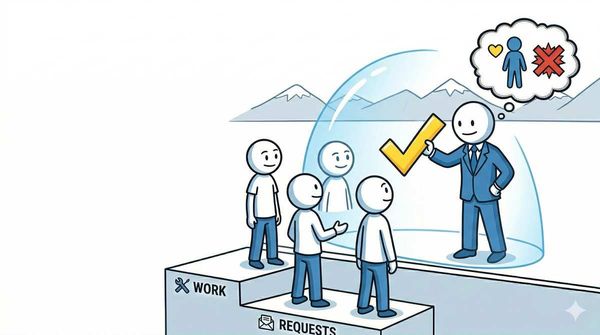
How to Write a Performance Review in 30 Minutes
If writing a performance review feels hard, that's a signal. Here's the process for managers who've done the work all year and just need to document it.

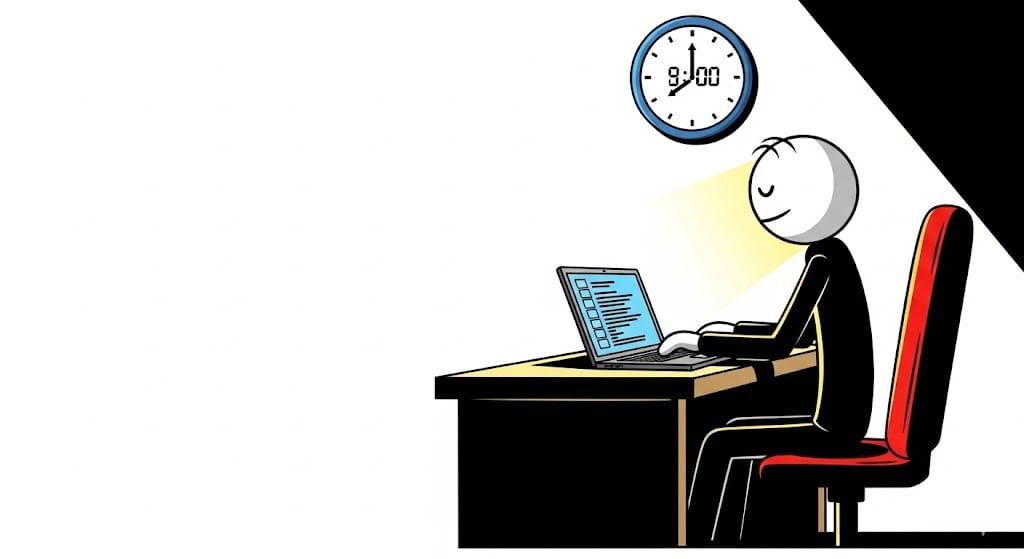
The performance review is not a writing project. It's documentation of conversations that have already happened.
If it feels like a writing project — if you're staring at a blank screen, trying to reconstruct what someone did over the past six months, scrambling to justify a rating — that's information. The ongoing feedback wasn't happening the way it should have been. Use that friction as a signal to do things differently next cycle.
But if you've been doing the work all year, the review should take about thirty minutes. Here's the process I use.
Start six weeks out
Six weeks before the review cycle closes, I let my associates know it's coming and ask them to prepare three things.
First: their results. What are the two or three things they actually delivered over the past six to twelve months? Not a list of tasks. Not a project inventory. Results, with the value and outcomes clearly articulated. What did you do, and why did it matter?
Second: their self-assessment on competencies. What are their strengths? Where are their opportunities? And critically — how did those competencies show up in the results they described? Results are what you did. Competencies are how you did it. Both matter, and they should connect.
Third: three-sixty feedback. I ask associates to go out to at least three to five peers, partners, or leaders and request direct input — what are you doing well, and what could you be doing differently? This gives me a broader signal beyond just what I've observed directly.
At the same time, I'm doing my own three-sixty. I'm reaching out to people the associate works with, asking my own questions, and keeping my own notes throughout the cycle. By the time we hit the review period, I've got four inputs: their results, their self-assessment, feedback they gathered, and feedback I gathered.
If you're running a smaller team or a smaller company, this still works — it just looks simpler. A three-person team doesn't need a formal process for this. It might just be a conversation where you ask your associate to come prepared with their top results and what they think is going well and not. The principle scales down without losing the value.
Before you sit down to write
When the materials are in, I do something that sounds counterproductive: I don't write yet.
I look at what the associate submitted. I review the feedback I collected. I look at the competency rubric we use across the team — not just for this person, but for everyone — to calibrate my thinking. And then I go for a walk and don't think about it.
That sounds like avoidance. It's not. It's letting things settle. By the time I sit down to write, I want to have a sense of the overall picture without forcing a conclusion. The walk lets the inputs simmer without me trying to prematurely resolve them into a rating.
The thirty-minute constraint
When I sit down, I give myself thirty minutes. That's it. In my experience, spending more time doesn't make the review better. It makes it more tortured. You start softening things, second-guessing yourself, overthinking how the person will react. The first thirty minutes, when you're working from a clear picture of someone's performance, tends to produce the most honest assessment.
Here's what I do in those thirty minutes.
I start with results. I look at what the associate wrote and I ask: do I agree? If yes, I tighten the language to make the value clearer. Sometimes people undersell what they did, or they describe the work without connecting it to the business impact. I reframe those results to be crisper and more value-oriented. If I think they're overclaiming something, I adjust that too.
Then I move to competencies. Where I agree with their self-assessment, I keep those and add specific language about why I see it as a strength or an opportunity. Where I think they're over-inflating, I push back. Where I see gaps they haven't addressed, I add them.
Then I read through everything to make sure it reads as one integrated perspective. The results and competencies should reinforce each other — the strengths should show up in how they delivered results, and the opportunities should connect to where the results fell short or where there's clear room to grow.
Finally, I go through the feedback I collected and pull in verbatim quotes. Not attributed — people don't see whose feedback it is — but direct quotes so the associate can see this isn't just my opinion. It's grounded in what multiple people observed.
I check that the overall rating feels balanced. One development area shouldn't tank a strong review. Results and competencies both have weight, and I make sure my assessment reflects both fairly.
Let it sit, then pressure-test it
After I write the review, I sit on it for a few days. When I come back, I almost never add anything. I usually just word-diet — remove what's redundant, tighten what's vague, cut anything that softens an important point without adding clarity.
Then I share it with my own manager and ask him to tell me what I've missed, where I'm being too heavy-handed, or where I'm letting someone off too easy. I want my assessment pressure-tested before it goes anywhere near the associate.
After that, we go through calibrations with other leaders — comparing assessments, discussing how people stack up against peers and against the rubric, surfacing if anyone's been rated significantly higher or lower than their peers would suggest. If I hear something in calibrations that changes my thinking, I'll revisit the assessment before it's final.
For smaller companies without formal calibration sessions, this step might just be a conversation with a co-founder or a peer manager. The goal isn't the ceremony — it's getting another set of eyes on your assessment before it's delivered. Even one other person can catch things you've missed or rationalized your way past.
The delivery
After calibrations, I deliver the review to the associate. By this point, there should be no news in the room. Everything in the review should be something that's been part of the ongoing conversation all year. The rating reflects discussions that have been happening, not a judgment delivered from nowhere.
If writing the review felt hard, that's worth reflecting on. In my experience, the reviews that are hardest to write are the ones where I've been most disconnected from the associate's work — where I don't feel like I understand their space well enough to articulate their value. That's not a review problem. That's a signal I need to be more engaged.
The review is the receipt. The conversation is the product.
Writing a clean review is one part. Delivering feedback in a way that actually changes something is the other — see How to Give Feedback That Sticks for the delivery side, and How to Give Feedback That Actually Lands for the full framework.