How to Give Feedback That Sticks
Most feedback slides off because it's not connected to what the person actually cares about. Here's how to give feedback that lands and changes behavior.


Most feedback slides right off. The manager says something. The employee nods. Nothing changes. Six months later the same thing shows up in the performance review and everyone acts surprised.
The feedback wasn't wrong. It just didn't land. And there's usually one reason for that: it wasn't connected to anything the person actually cares about.
Start with motivation, not behavior
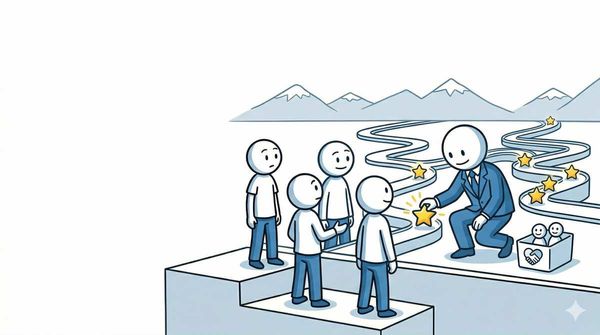
Before you think about what feedback to give, figure out what this person is actually trying to get to. What do they care about? Where do they want to go? What matters to them in this job and in their career?
This isn't soft stuff. It's practical. Feedback anchored to someone's real motivation lands completely differently than feedback delivered against a generic competency rubric. One feels like information. The other feels like criticism.
I have an associate who wants to get promoted to a more senior level. At his current level, promotion is basically a push system — managers advocate, the associate delivers results, and the promotion happens. But at the next level up, the game changes entirely. It becomes a pull system. People above you have to recognize that you're already operating at that level and advocate for pulling you up. You can't be promoted into it. You have to be seen as already being there.
Once I understood that's where he wanted to go, my feedback got very specific. If you want to be seen as a senior leader, you have to lead with vision. Not a list of things you've delivered. Not a status report. A clear point of view on where you're taking your space and why that matters. Because the people who are going to advocate for your promotion aren't watching your execution. They're watching how you think and communicate about the future.
That feedback lands because it's not about abstract competency development. It's about what he actually wants and what's in the way of getting it.
Listening beneath the surface
Sometimes the motivation isn't stated directly. You have to hear it.
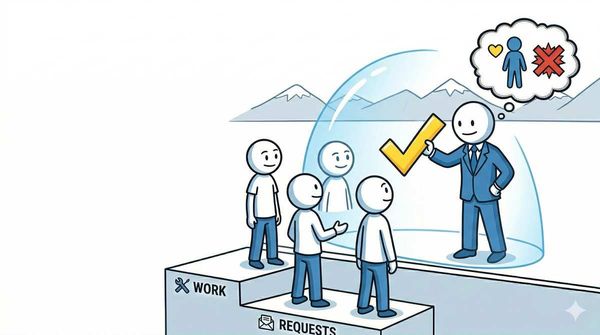
I had an associate who came to me early in our working relationship and mentioned that he was talking to other teams. Casual, almost offhand. He wasn't making a threat. But what I heard underneath it was: I've been moved around. I don't know if I'm valued here. I don't see a future in this for me. So unless something changes, I'm going to find something else.
That's a different message than "I'm talking to other teams." And it required a different response.
What this person needed wasn't a conversation about why the team was great or why he should stay. What he needed was to feel like he had ownership, like his expertise was being used, like someone was betting on him. So I brought him into recruiting conversations for roles that would support his product area. I made it clear that these people would be dotted-line reporting to him. I told him I'd work with leadership on the right org structure over time, and that whether he technically ended up on my team or not was secondary to making sure the right person was driving the right work.
I didn't tell him he was valued. I showed him — through the decisions I made about how we structured the work — that I was investing in him.
That's feedback acting on underlying motivation. You don't always have to name it. Sometimes your moves make the message clear.
Close to the moment
Feedback has a shelf life. The closer to the moment you give it, the more the person can connect your observation to the specific thing that happened. The further out you wait, the more abstract it becomes, and the more likely they are to get defensive or confused about what you're even referring to.
I try to give feedback within twenty-four to forty-eight hours of the thing I observed. Sometimes I take a few hours to process first. I've changed my opinion after sleeping on something and come back with a different take than my initial reaction. I'm honest with people about that — if I give you an opinion quickly, there's a chance I'll come back in twenty-four hours and adjust it. But I'd rather have that conversation than hold feedback until it's stale.
The timeliness isn't about urgency. It's about making the feedback actionable. If you can connect the observation to the moment, the person knows exactly what you saw and can apply the information to the next similar situation. That's what makes it stick.
When you get it wrong
Sometimes you read the motivation incorrectly. You echo back what you think you're hearing and they say: that's not it.
That's not a failure. That's information.
When someone pushes back on your read of what's driving them, they're telling you that you haven't heard them yet — or that your framing doesn't match their reality. The right move is to say thank you and ask them to help you understand where you went wrong. What did I miss? How would you describe it?
You're not attached to being right about what their motivation is. You're attached to actually understanding them. That's the whole point.
I've found that people don't need you to get it exactly right. They just need to feel like you're genuinely trying to understand, not running through a playbook. When you ask them to correct you, you're showing that. And that alone builds more trust than getting it right the first time.
The pulse check underneath all of it
None of this works if you're not continuously paying attention.
I'm constantly asking how things are going, where people see themselves, what they're excited about, where they're stuck. Open questions, not surveys. Just conversation starters that keep the door open. We also run engagement surveys periodically to get a broader read on sentiment.
My goal is that everyone on my team feels like they're doing the best work of their career here. And if they feel this is the wrong role for them, I want them to feel like we're actively working toward finding it — whether that's here or somewhere else. A team that helps people find their best work, even if that means pointing them elsewhere, is a team people respect and remember. It's also a team other people want to recruit from, which is a good problem to have.
Knowing what matters to your people isn't a one-time exercise. It's ongoing. And it's the foundation for feedback that actually sticks.
One-on-ones are where feedback lands best. If yours have drifted into status updates, The One-on-One Isn't a Status Update covers how to reset them. And if you want the complete feedback framework — timing, pushback, building a feedback culture — it's all in How to Give Feedback That Actually Lands.