Building a Feedback Culture (Not Just Moments)
A feedback culture isn’t something you announce. It’s something people experience — in meetings, in one-on-ones, in how honest answers get received.

A feedback culture isn’t something you announce. It’s something people experience — in meetings, in one-on-ones, in how questions get asked and how honest answers get received.
You can’t build it with a training program. You build it by doing it, consistently, until it’s just how things work around here.
What a Real Feedback Culture Looks Like
The team I’m on now operates around something we call truth-seeking. It came from my boss — a data scientist by background, PhD, someone who spent years in model development and credit infrastructure. The culture he came from runs on the scientific method: state your hypothesis, explain why you believe it, defend it against real questions.
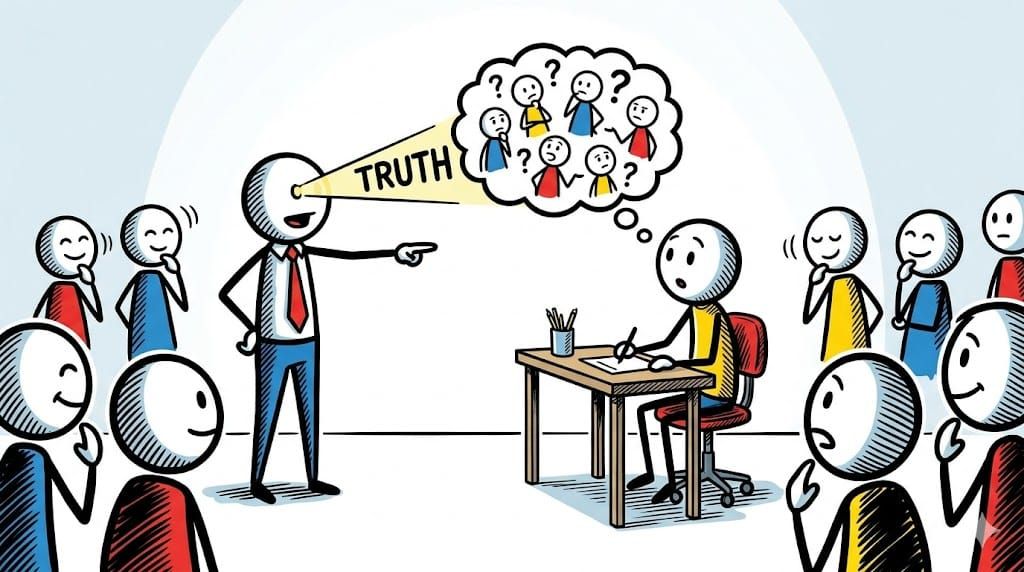
That’s how our team works now. When someone brings work to a meeting, they’re going to get real feedback. Not nodding. No vague approval. Questions that go somewhere.
That’s uncomfortable for some people. And honestly, some people have left because of it. But the ones who stay develop fast. Because the feedback is constant and it’s real. You can’t hide in a culture like that. And it turns out most people — when they actually trust the environment — don’t want to.
The signal that it’s working: people start bringing problems earlier. Instead of managing an issue quietly until it becomes a crisis, they surface it because they trust that the feedback they’ll get will actually help them solve it.
How to Onboard Someone Into It
You can’t prepare someone for a truth-seeking culture by describing it. You have to start demonstrating it immediately.
When I brought on a new associate recently, I blocked out about eight hours in the first week just to give context — the business, the products, the strategy, how all of it connects. As I was going through that, I started asking pointed questions. Not gotcha questions. Questions designed to show what rigorous thinking looks like in practice.
I also asked them to come back after each session and synthesize what they’d learned. Not a summary — a synthesis. What do you make of this? Where do you see the gaps? That’s when I start demonstrating truth-seeking directly: I read through what they wrote, I ask hard questions about it, and the questions aren’t about them — they’re about the content.
Then I point them toward other people on the team who do this naturally. I want them to see it coming from multiple directions. Because if it only comes from me, it looks like my style. When it comes from the whole team, they understand it’s the culture.
What Actually Makes It Stick
The practice field matters more than the framework.
If you want your team to get good at feedback, give them constant opportunities to practice it. One-on-ones, team meetings, working sessions — all of it is a field where this happens. You’re not waiting for the right moment. You’re using every moment.
Ask hard questions in team meetings and sit with the silence until someone answers. Invite people to push back on your ideas publicly so they see it’s safe to do the same. When you get something wrong, name it out loud. I was wrong about that. Here’s what I missed.
That last one is the hardest and the most important. Nothing builds a feedback culture faster than watching a leader receive feedback well. Not defensively, not with a thousand qualifications — just cleanly. That’s a fair point. I’m going to think about that.
If you can do that consistently, your team will start doing it too. And then you have something real — not a moment, but a culture.
This post is part of the series How to Give Feedback That Actually Lands. If your one-on-ones are where this culture lives or dies, make sure they’re running as development conversations — not status updates: The One-on-One Isn’t a Status Update.